2015 1/4 oz Canadian Polar Bear & Cub Gold Coin IRA
- Year: 2015
- Mint Mark: Not shown
- Purity: .9999 fine gold
- Manufacturer: Royal Canadian Mint
- Condition: Brilliant Uncirculated
- Certificate of Authenticity: Not included
Description:
The Royal Canadian Mint has a long history of celebrating Canada’s native wildlife through its gold and silver coinage. Animals such as the North American bison, grizzly bear, and cougar have appeared in many of its popular collections. Among these designs, the polar bear stands out as one of the largest and most recognizable animals featured on Canadian coins.
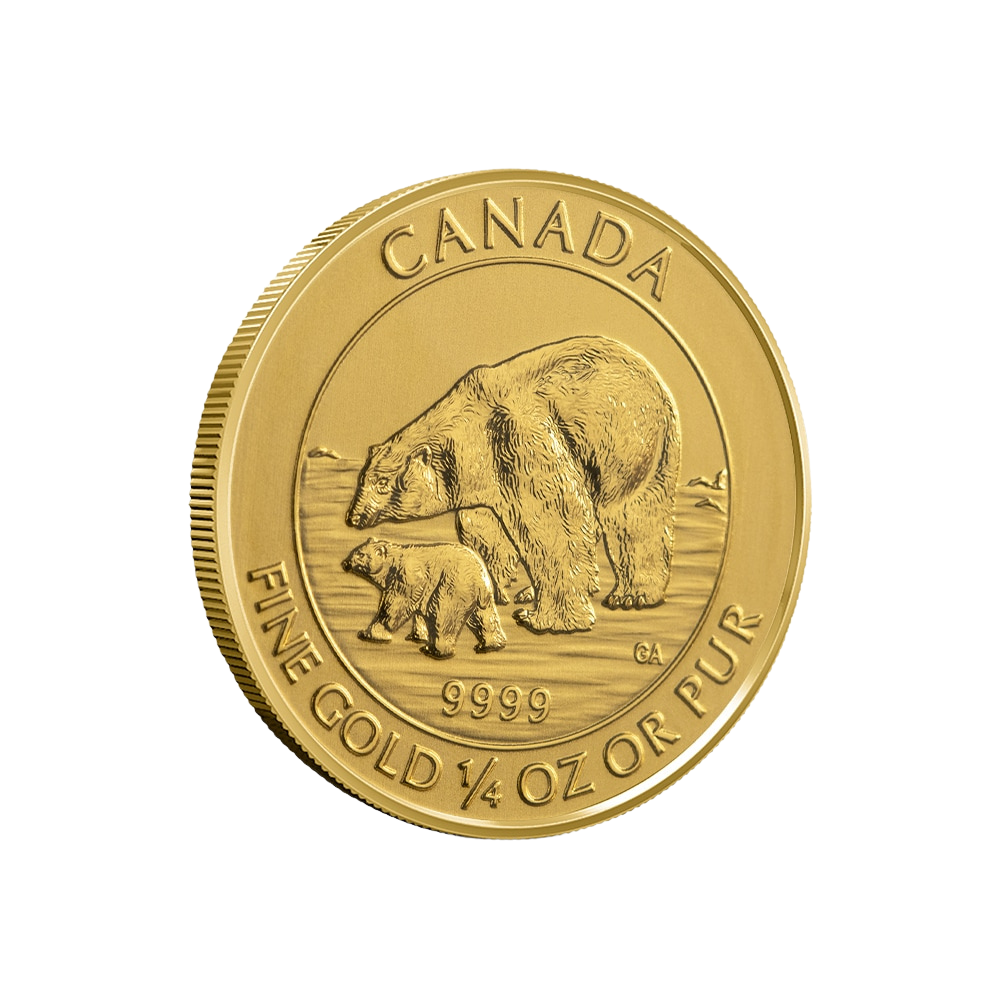
The Polar Bear and Cub design was created by Inuit artist Germaine Arnaktauyok. It appeared on several Royal Canadian Mint releases in 2015, including this 2015 1/4 oz $10 Canadian Gold Polar Bear and Cub Coin. The design was also issued in other collectible gold and silver versions.
Polar bears are among the largest land carnivores in the world. Closely related to brown bears, they live throughout the Arctic regions of Canada, Alaska, Russia, and other northern areas. Adult male polar bears, known as boars, can weigh more than 1,500 pounds.
Each coin in this listing is offered in Brilliant Uncirculated condition. BU coins show no signs of circulation wear, but minor imperfections may still be present from the minting and handling process. These may include small contact marks, light spotting, or slight interruptions in the coin’s original luster.
The obverse features the right-facing portrait of Queen Elizabeth II. Designed by Canadian artist Susanna Blunt in 2003, this portrait appeared on Canadian coinage for many years.
The reverse shows a polar bear walking across the Arctic tundra with its cub. Polar bear cubs remain with their mothers, known as sows, while they learn how to survive in the harsh northern environment. Arnaktauyok’s design captures the close bond between the mother and cub against the open Canadian Arctic landscape.
The Royal Canadian Mint is Canada’s official mint. It opened its Ottawa facility in 1908 and later expanded with a second facility in Winnipeg.