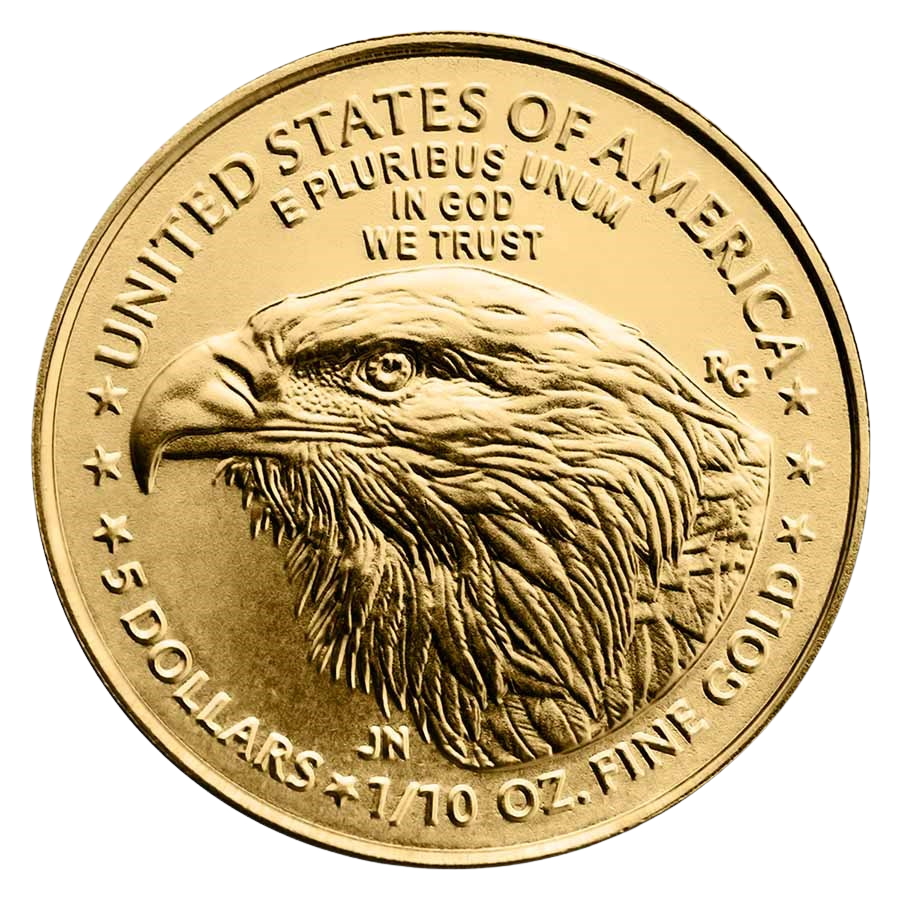

A Gold IRA holds metal inside a tax-advantaged retirement account, can be funded with existing 401(k) money, and costs about $350 a year in custodian and storage fees. Physical gold bought with cash is yours immediately with no fees, but gains are taxed at up to 28% and it cannot be funded with retirement money. Many people hold both.
Key takeaways
- A Gold IRA holds metal in a tax-advantaged retirement account and can be funded with existing 401(k) or IRA money.
- Physical gold bought with cash is yours immediately with no ongoing fees.
- Gains on physical gold held outside an IRA can be taxed at the collectibles rate of up to 28%.
- A Gold IRA costs about $350 a year for custody, storage, and insurance.
- Many people hold both: an IRA for retirement savings and coins on hand as a personal reserve.
Here is a conversation that happens every day in the precious metals world. Someone decides they want to own gold, then hits an immediate fork in the road: do I open a Gold IRA, or do I just buy gold outright and keep it myself?
It is a genuinely good question, because these are two different tools that happen to involve the same metal. One is a retirement account with tax advantages and rules. The other is direct ownership with total freedom and zero paperwork. Neither is “better.” They solve different problems.
What Is the Difference Between a Gold IRA and Physical Gold?
A Gold IRA holds physical gold inside a tax-advantaged retirement account. The gold is real, but it is stored at an approved depository, administered by a custodian, and governed by IRA rules on contributions and withdrawals. Physical gold ownership means buying coins or bars with cash and taking delivery. It arrives at your door, you store it however you like, and no rules apply beyond ordinary tax law when you eventually sell.
Same metal. Completely different wrapper. And the wrapper changes almost everything about how the gold works for you. If the IRA side is new to you, What Is a Gold IRA? covers the structure in full.
Gold IRA vs. Physical Gold: Full Comparison
| Gold IRA | Physical gold (cash purchase) | |
|---|---|---|
| Tax on growth | Tax-deferred, or tax-free in a Roth | Taxed on sale at the collectibles rate, up to 28% |
| Fundable with 401(k) or IRA money | Yes, through a tax-free rollover | No, cash only |
| Take possession today | No, only at distribution | Yes, immediately |
| Annual cost | About $350 (custodian, storage, insurance) | $0 after purchase, plus a safe |
| Storage and insurance | Included, professionally vaulted and audited | Your responsibility |
| Access before 59½ | Distribution with taxes and a 10% penalty | Unrestricted |
| Required minimum distributions | Yes at 73 for traditional accounts | None |
| Estate handling | Passes to named beneficiaries outside probate | Heirs must find, value, and handle it |
| Privacy during ownership | Reported annually by the custodian | Minimal reporting |
| Best suited to | Long-term retirement wealth | Immediate personal reserve |
Where the Gold IRA Wins
Tax advantages, and they’re significant
This is the headline reason Gold IRAs exist. Inside a traditional Gold IRA, your gold grows tax-deferred: no taxes on gains until you take distributions in retirement. Inside a Roth Gold IRA, qualified withdrawals are completely tax free.
Compare that to physical gold you hold personally. The IRS classifies gold as a collectible, which means long-term gains are taxed at your ordinary income rate up to a 28% maximum, higher than the 15% to 20% most people pay on long-term stock gains (IRS Topic No. 409). Sell $50,000 of appreciated gold from your safe and the tax bill is real. Sell it inside a Roth IRA in retirement and the tax bill can be zero.
You can fund it with money you already have
Most people do not have $100,000 in cash sitting around to buy gold. But many have exactly that in an old 401(k) or IRA. A Gold IRA lets you reposition existing retirement funds into metals through a tax-free rollover, without writing a check or triggering a taxable event. Physical gold requires cash on the barrel.
For anyone whose wealth lives mostly in retirement accounts, this is often the only practical way to own a meaningful amount of gold.
Professional storage and insurance, handled
IRA metals sit in high-security depositories with full insurance, professional auditing, and documentation of everything you own. No safe to buy, no homeowner’s insurance rider to negotiate, no wondering whether your coverage actually extends to $80,000 in coins. Most standard homeowner’s policies cap precious metals coverage at a few hundred dollars.
Estate and paperwork benefits
An IRA passes to named beneficiaries cleanly, outside probate, with a clear paper trail. Physical gold in a safe requires your heirs to know it exists, find it, value it, and handle it properly. More inherited gold has been lost, mispriced, or quietly sold at pawn-shop rates than anyone likes to admit.
Where Physical Gold Wins
It’s in your hands. Full stop.
This is the argument, and it is a legitimate one. Gold you hold answers to no custodian, no depository, no account statement. In a genuine crisis, whatever shape you imagine that taking, it is simply there. For people whose core motivation is self-reliance, no depository arrangement fully scratches that itch.
No ongoing fees
Once you have bought it, physical gold costs nothing to own. No custodian fee, no storage bill. A quality safe is a one-time purchase. Over decades that is real savings, especially for smaller holdings where a $350 annual fee is a meaningful percentage.
Total flexibility
Want to sell one coin to a local dealer tomorrow? Gift a bar to your daughter at her wedding? Physical gold does whatever you want, whenever you want, with no distribution rules, no age thresholds, and no required minimum distributions at 73. You also do not need to wait until 59½ to access value without penalty.
Privacy
Physical gold purchased with cash and held at home involves minimal reporting during ownership. An IRA, by design, is documented and reported annually. For some people that is a feature; for others it is not.
The Honest Downsides of Each
Gold IRA drawbacks: annual fees of roughly $350 all in, no personal possession until you take a distribution, early withdrawal penalties before 59½, and RMDs at 73 for traditional accounts. You are trading control for tax advantages.
Physical gold drawbacks: the tax hit on gains, the burden and risk of storage (theft, fire, loss), thin insurance options, no way to fund it with retirement money, and the estate complications above. You are trading tax efficiency and security for control.
Notice these are mirror images. Every strength of one is the weakness of the other, which is exactly why the right answer depends on what you are solving for.
How to Decide: Three Questions
1. Where is the money coming from? If it is an old 401(k) or IRA, the Gold IRA is really your only sensible option, since the alternative means cashing out and paying taxes and penalties just to buy metal. If it is cash savings, both doors are open.
2. What’s the timeline? Money you will not touch until retirement belongs in the tax-advantaged wrapper. Gold you might want to access, sell, or hand to family in the next few years fits better outside an IRA.
3. What are you actually protecting against? If the answer is inflation and market risk eroding your retirement, that is the Gold IRA’s job. If the answer includes wanting a tangible reserve you can physically reach in an emergency, no account structure substitutes for a few coins in a home safe.
Why Most People End Up Doing Both
Here is what experienced precious metals investors tend to do, and it is worth saying plainly: this is not an either/or decision.
A common approach looks like this. The bulk of the gold allocation goes into a Gold IRA, funded by a rollover, where the tax advantages do their work on the largest dollar amounts over the longest timeline. Alongside it, a smaller cash purchase of physical coins stays home, covering the personal-possession, emergency-reserve role that an IRA structurally cannot fill.
The proportions are personal. Someone with $300,000 in retirement accounts and modest cash savings might be 90/10 toward the IRA. Someone with substantial taxable savings and a strong self-reliance streak might run it closer to even. There is no formula, just an honest look at where your money sits and what you want the gold to do.
The convenient part: you do not need two companies for this. Anthem Gold Group handles both sides, Gold IRAs with the full custodian and depository setup, and direct cash purchases shipped discreetly to your door.
Get your free Precious Metals Investor Kit
Plain-language answers on Gold IRAs, rollovers, and IRS rules, with no pressure.
Get My Free Guide Call (888) 444-2948Gold IRA vs. Physical Gold FAQ
Is physical gold taxed differently than gold in an IRA?
Yes, and it is the single biggest difference. Physical gold sold outside a retirement account is taxed as a collectible at up to 28%. Gains inside a traditional IRA are tax-deferred until distribution; gains inside a Roth IRA can be tax free entirely.
Can I convert my physical gold into a Gold IRA?
No. Metals you already own personally cannot be contributed to an IRA. Everything in the account must be purchased with IRA funds through the account. You could sell your gold and contribute cash, subject to annual limits, but that triggers tax on any gain.
Can I take my Gold IRA metals home eventually?
Yes, as an in-kind distribution once you are eligible. The depository ships the actual coins and bars to you, and the value is taxed as a distribution for traditional accounts.
Which is better for a $25,000 investment?
It usually comes down to the source of funds. From retirement money, the IRA. From cash you may want to access before 59½, physical. At smaller balances the flat annual fee is a higher percentage, so it is worth running the math.
Is home-stored gold insured?
Only if you arrange it. Most homeowner’s policies cap precious metals coverage at a few hundred dollars, so meaningful coverage requires a scheduled rider or a separate policy.
Do I need to report physical gold purchases?
Dealers have their own reporting obligations on certain transactions, and you owe tax on gains when you sell. Ask a CPA about your situation rather than assuming either way.
The Bottom Line
A Gold IRA and physical gold are not competitors so much as teammates with different positions. The IRA is the retirement vehicle: tax-advantaged, professionally secured, and fundable with the 401(k) money most people actually have. Physical gold is the personal reserve: immediate, private, and entirely yours.
Which is “right” comes down to where your money is, when you will need it, and what kind of protection you are really after. For the mechanics of the IRA side, read How Does a Gold IRA Work? and Gold IRA Fees Explained. For the compliance boundaries, see Gold IRA Rules.
Compare both options with a specialist at Anthem Gold Group, or call (888) 444-2948. Because they handle both Gold IRAs and direct purchases, they have no incentive to push you toward one over the other. For the tax specifics of your situation, a conversation with your CPA rounds out the picture.
Same gold either way. The smart move is putting it in the right wrapper for the job.

About the author: John Murphy
[[ROLE AT ANTHEM GOLD GROUP]]. [[X YEARS]] of experience in [[precious metals / retirement planning / financial writing]]. [[One sentence on relevant background, e.g., number of clients helped, credentials, publications]].Educational content, not financial or tax advice. Your own tax situation drives this decision. Talk to a CPA. Anthem Gold Group is not a licensed financial advisor.