
A Gold IRA is a self-directed individual retirement account that holds physical gold, silver, platinum, or palladium instead of stocks and funds. It carries the same tax treatment and contribution limits as a traditional or Roth IRA, but the metals must meet IRS purity standards and be stored at an approved depository, never at home.
Key takeaways
- A Gold IRA is a self-directed IRA that holds IRS-approved physical gold, silver, platinum, or palladium.
- It has the same tax treatment and limits as a traditional or Roth IRA: $7,500 for 2026, or $8,600 at age 50+.
- Metals must meet IRS purity standards and sit in an approved depository, never at home.
- Most people fund one with a direct rollover or transfer from a 401(k) or IRA, which isn’t taxable.
- Typical ongoing cost is about $350 a year, and gold pays no income, so it works best as a diversifier.
What Is a Gold IRA, in Plain English?
A Gold IRA is an individual retirement account that holds physical precious metals instead of (or alongside) the usual stocks, bonds, and mutual funds. That means real gold coins and bars, stored securely on your behalf, inside an account that gets the same tax advantages as a traditional or Roth IRA.
Technically it is a type of self-directed IRA. “Self-directed” just means you have more control over what goes into the account. Instead of being limited to whatever funds your brokerage offers, you can hold IRS-approved alternative assets, and precious metals are one of the most popular choices.
The important thing to understand is that a Gold IRA is not an exotic loophole. It has been allowed under U.S. law since the Taxpayer Relief Act of 1997, which carved out an exception to the general ban on holding collectibles in an IRA for bullion meeting specific fineness standards. That exception now lives in Internal Revenue Code section 408(m)(3). The tax rules, contribution limits, and withdrawal rules mirror the IRAs you already know.
You will also see these accounts called a precious metals IRA, a silver IRA, or a self-directed precious metals IRA. Same structure, different marketing name.
How Is a Gold IRA Different From a Regular IRA?
Most of it is identical. The differences come down to what you can hold and where it has to sit.
| Traditional / Roth IRA at a brokerage | Gold IRA (self-directed) | |
|---|---|---|
| What it holds | Stocks, bonds, mutual funds, ETFs | Physical gold, silver, platinum, palladium meeting IRS purity standards |
| Who administers it | Your brokerage | A self-directed IRA custodian (bank or trust company) |
| Where assets are held | Book entry at the brokerage | An IRS-approved depository vault |
| 2026 contribution limit | $7,500, or $8,600 if 50 or older | Identical |
| Rollovers allowed | Yes | Yes, and they do not count against the limit |
| Tax treatment | Tax-deferred (traditional) or tax-free qualified withdrawals (Roth) | Identical |
| RMDs | Age 73 for traditional | Identical |
| Annual account fees | Often $0 | Roughly $250 to $500 for custodian plus storage and insurance |
| Can you take physical delivery? | Not applicable | Yes, as an in-kind distribution once you qualify |
The short version: same tax wrapper, different contents, and a modest annual cost for vaulting and insuring something physical. For a full cost breakdown, see Gold IRA Fees Explained.
Traditional, Roth, or SEP: Which Gold IRA Should You Open?
The metal is the same in all three. The tax timing is what changes.
| Account type | Funded with | Taxed when | Best suited to |
|---|---|---|---|
| Traditional Gold IRA | Pre-tax dollars | On withdrawal, as ordinary income | People who expect a lower tax bracket in retirement, and anyone rolling over a traditional 401(k) or IRA |
| Roth Gold IRA | After-tax dollars | Never, on qualified withdrawals | People who expect higher taxes later, or who want no RMDs during their lifetime |
| SEP Gold IRA | Pre-tax employer contributions | On withdrawal | Self-employed people and small business owners who want higher contribution room |
One practical note: the account type normally needs to match what you are rolling from. A traditional 401(k) rolls into a traditional Gold IRA with no tax due. Converting traditional money into a Roth is allowed, but it is a taxable event in the year you do it, so run the numbers with a CPA first.
Why Do People Open Gold IRAs?
Gold has a reputation for holding its value when other things do not, and there is a reason that reputation has stuck around for thousands of years. Here is what draws most people to it.
Protection against inflation. When the dollar loses purchasing power, gold has historically tended to hold its ground. If you remember what grocery bills looked like a few years ago compared to now, you understand why this matters to retirees on a fixed income.
Diversification. Gold often moves independently of the stock market. When equities take a hit, gold does not necessarily follow. Holding some of your retirement in an asset that does not move in lockstep with everything else can smooth out the ride. This is the reason most often cited by financial professionals, and it is the one that holds up best under scrutiny.
A tangible asset. Unlike a stock certificate or a number on a screen, gold is a physical thing. It cannot go bankrupt, get delisted, or be diluted by a bad earnings report. For many people there is real peace of mind in that.
Geopolitical uncertainty. Wars, elections, banking scares, debt ceiling standoffs. When headlines get unsettling, demand for gold has tended to rise. It is often called a “safe haven” asset for exactly this reason.
None of this means gold only goes up. It does not. Gold pays no dividend and no interest, it can trade flat or down for years at a stretch, and it has had deep drawdowns. The point of a Gold IRA usually is not to get rich. It is to hold something in your retirement that behaves differently from the rest of it.
How Does a Gold IRA Work?
There are three parties involved in every Gold IRA, and knowing who does what makes the whole thing much less confusing.
1. The custodian. The IRS requires every IRA to have a custodian, a licensed financial institution that administers the account, handles the paperwork, and reports to the IRS. You cannot buy gold, put it in your closet, and call it an IRA. The custodian keeps the account compliant and files the annual reporting, including Form 5498 and a fair market valuation.
2. The depository. Your metals must be stored in an IRS-approved depository. These are high-security, insured vaults built specifically for precious metals. Your holdings are recorded in your name, audited, and insured against theft or loss.
3. The precious metals company. This is who you actually talk to. A company like Anthem Gold Group helps you open the account, coordinates with the custodian, walks you through the rollover, and helps you select IRS-approved metals. The practical value here is that you deal with one phone number instead of three institutions.
For the full walkthrough of what happens in what order, read How Does a Gold IRA Work? Step-by-Step.
What Metals Can You Hold in a Gold IRA?
The IRS sets minimum purity, also called fineness, for each metal.
| Metal | Minimum fineness | Common IRA-eligible examples |
|---|---|---|
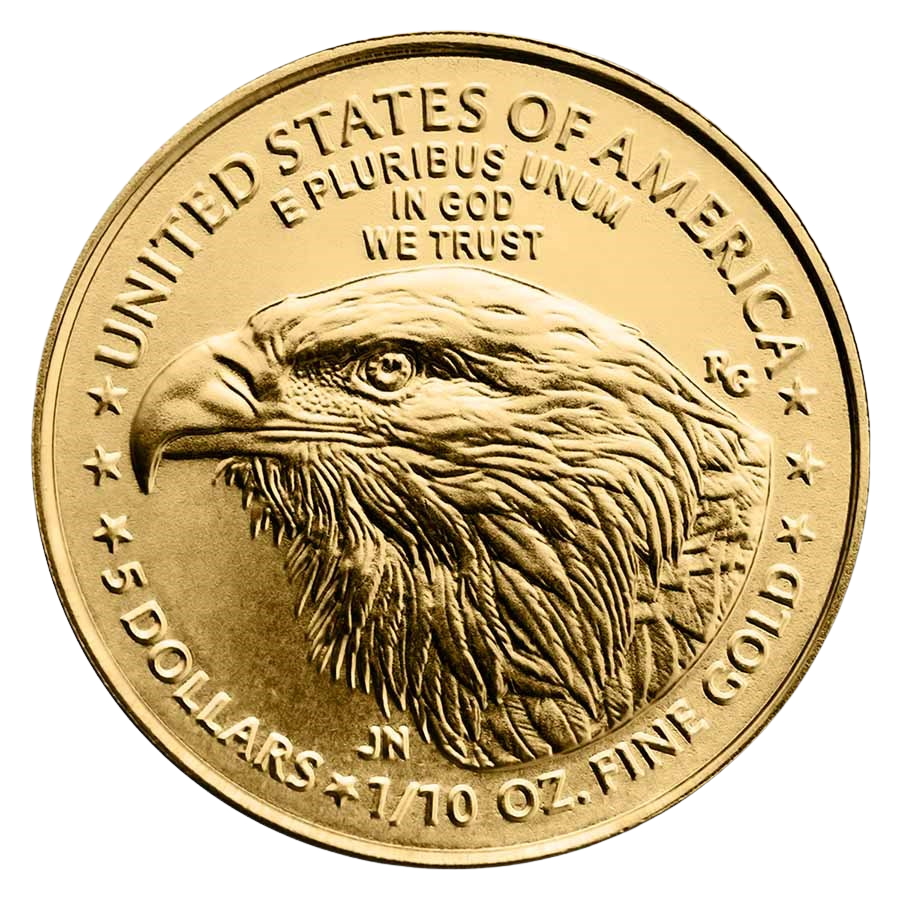
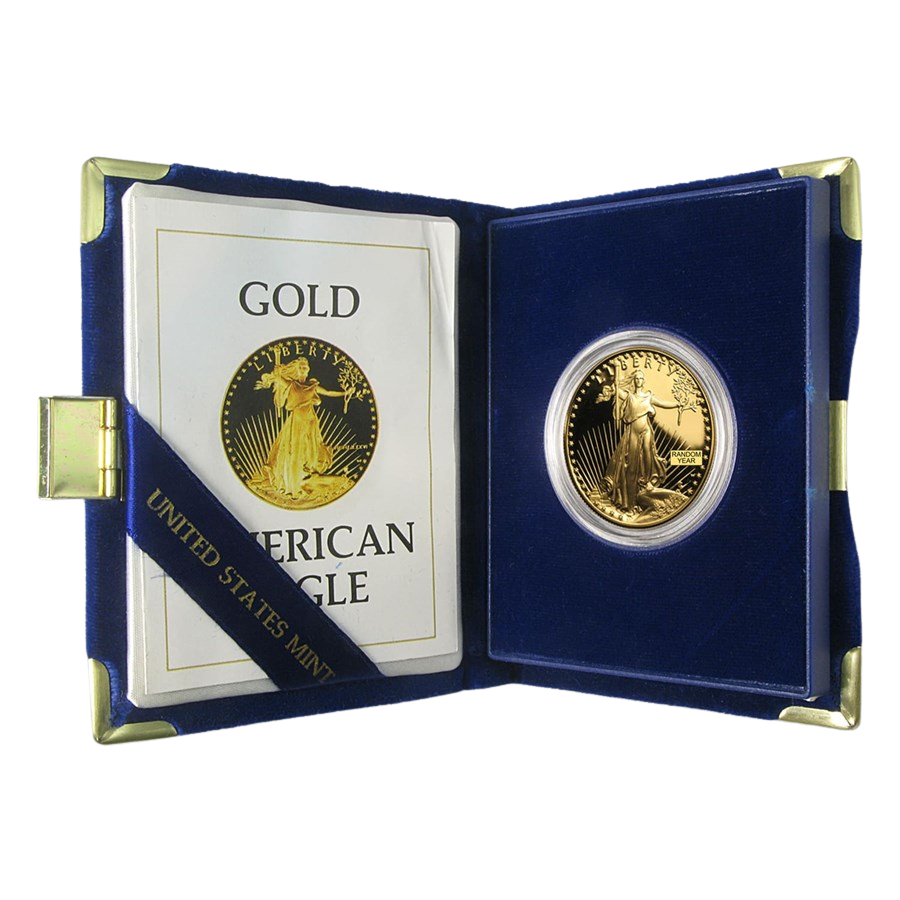
| Gold | 99.5% (0.995) | American Gold Eagle (allowed by statute at 91.67%), Canadian Gold Maple Leaf, Austrian Philharmonic, Australian Kangaroo, bars from accredited refiners |
| Silver | 99.9% (0.999) | American Silver Eagle, Canadian Silver Maple Leaf, accredited refiner bars |
| Platinum | 99.95% (0.9995) | American Platinum Eagle, Canadian Platinum Maple Leaf, accredited bars |
| Palladium | 99.95% (0.9995) | Canadian Palladium Maple Leaf, accredited bars |
Bars and rounds must come from a refiner accredited by NYMEX, COMEX, LBMA, or a national government mint.
What does not qualify: collectible and rare coins, graded “numismatic” issues, pre-1933 U.S. gold, jewelry at any karat, and foreign coins that miss the purity threshold, such as the South African Krugerrand at 91.67% with no statutory exception. Metals you already own personally cannot be contributed either. Everything in the account must be bought with IRA funds through the account.
Because eligibility turns on specific product details rather than general categories, it is worth working with a company that verifies IRS eligibility on every item before the purchase happens. That is standard practice at Anthem Gold Group. The full breakdown is in Gold IRA Rules: What the IRS Allows and Prohibits.
How Do You Fund a Gold IRA?
Here is the part that surprises most people in a good way. You usually do not need new money. Most people fund a Gold IRA by rolling over or transferring from an existing retirement account:
A 401(k) from a former employer
A traditional or Roth IRA
A 403(b), 457(b), or TSP
A SEP or SIMPLE IRA
Done correctly, a direct transfer or direct rollover is not a taxable event. Your money moves from one tax-advantaged account to another, and the IRS treats it as a continuation of your retirement savings rather than a withdrawal. The IRS rollover chart shows which account types can move into which.
The operative phrase is “done correctly.” An indirect rollover, where a check is made out to you personally, starts a 60-day clock, and employer plans typically withhold 20% that you then have to replace out of pocket to complete the rollover. Miss the deadline and the IRS treats the whole thing as a distribution. This is the single most common expensive mistake in this process, and it is entirely avoidable by moving money institution to institution.
What Does a Gold IRA Cost?
A Gold IRA costs more to maintain than a basic brokerage IRA, because physical metal has to be vaulted and insured. The costs are flat and predictable.
| Fee | Typical range | Frequency |
|---|---|---|
| Account setup | $50 to $100 | One time, often waived |
| Custodian administration | $75 to $300 | Annual |
| Storage and insurance | $100 to $300 | Annual |
| Typical ongoing total | About $350 | Annual |
On a $100,000 account, roughly $350 a year works out to 0.35%, comparable to the expense ratio on many actively managed mutual funds. Because most of these fees are flat rather than percentage-based, the cost shrinks as a share of your account as it grows.
Anthem Gold Group waives IRA fees for up to five years depending on your initial investment amount, so ask what your account size qualifies for. Full detail lives in Gold IRA Fees Explained.
What Are the Gold IRA Rules in 2026?
These mirror standard IRA rules, with a few additions specific to physical metal.
Contribution limits. For 2026, $7,500 if you are under 50 and $8,600 if you are 50 or older, per the IRS. Rollovers and transfers do not count against these limits.
Early withdrawals before age 59½ generally trigger ordinary income tax plus a 10% penalty, with the usual exceptions.
Required minimum distributions begin at age 73 for traditional Gold IRAs. Roth IRAs have no RMDs during your lifetime. You can satisfy an RMD in cash or take metals in kind.
Home storage is not allowed. Storing IRA metals at home violates IRS rules and can disqualify the entire account. In McNulty v. Commissioner (2021), the Tax Court treated a couple’s home-stored IRA gold as a full taxable distribution with penalties on top.
No self-dealing. You cannot sell your own gold to your IRA, buy from it personally, pledge it as loan collateral, or transact with disqualified family members.
What Are the Pros and Cons of a Gold IRA?
| Pros | Cons |
|---|---|
| Diversification into an asset that often moves independently of equities | No dividends, no interest, no yield of any kind |
| Same tax advantages as any traditional or Roth IRA | Annual custodian and storage costs a stock IRA does not have |
| Can be funded with existing retirement money through a tax-free rollover | You cannot take possession of the metals until you take a distribution |
| Professional vaulting and full insurance included | Selling requires a dealer rather than a one-click market order |
| Physical asset with no counterparty and no earnings risk | Prices can trade flat or fall for extended stretches |
| Passes cleanly to named beneficiaries outside probate | RMDs at 73 on traditional accounts, and metal does not divide neatly |
Gold IRA vs. Gold ETFs, Mining Stocks, and Coins at Home
A Gold IRA is not the only way to get gold exposure in a retirement plan. Here is how the options compare.
| Gold IRA | Gold ETF in a brokerage IRA | Mining stocks | Coins bought with cash | |
|---|---|---|---|---|
| Own physical metal | Yes | No, you own shares | No | Yes |
| Tax-advantaged | Yes | Yes | Yes | No |
| Fundable with 401(k) money | Yes | Yes | Yes | No |
| Ongoing cost | About $350/year flat | Expense ratio, often 0.2% to 0.4% | Trading costs | None after purchase |
| Counterparty risk | Depository only | Fund structure and custodian | Company and operational risk | None |
| Can hold it in your hand | Only at distribution | Never | Never | Immediately |
| Tax on gains outside an IRA | Not applicable | Up to 28% collectibles rate for most metal ETFs | Standard capital gains | Up to 28% collectibles rate |
The honest summary: an ETF is cheaper and more liquid but is a financial claim rather than metal. Mining stocks are equities that happen to correlate with gold and carry business risk on top. Coins at home give you possession but no tax shelter. A Gold IRA is the option that combines physical ownership with the retirement tax wrapper. For the direct head-to-head with buying coins outright, see Gold IRA vs. Physical Gold.
Is a Gold IRA Right for You?
It tends to make sense if:
You are within 10 to 15 years of retirement and want to reduce concentration risk
A large portion of your nest egg is currently in equities
You have an old 401(k) sitting with a former employer
You are concerned about inflation eroding fixed-income savings
You sleep better owning something tangible
It is probably a poor fit if:
You need the money within a few years
You are still building your emergency fund or carrying high-interest debt
You are looking for growth or income rather than stability
You would be putting a large majority of your retirement into one asset
You are not yet contributing enough to a 401(k) to capture an employer match
Most financial professionals suggest keeping precious metals to a portion of a portfolio rather than going all in. Gold is a stabilizer, not a growth engine. Take your time, ask questions, and never let anyone rush you.
How Do You Choose a Gold IRA Company?
Your experience depends almost entirely on who is guiding you. Four things to look for:
Transparent pricing. Straight answers about every fee before you commit to anything.
No pressure tactics. Artificial urgency tells you how a company operates.
Verifiable third-party reviews. Check the Better Business Bureau, TrustLink, Trustpilot, and Google, not just testimonials on the company’s own site.
Education first. A good company wants you to understand what you are buying.
Anthem Gold Group holds a 5.0 rating across more than 100 reviews, has been named “America’s #1 Trusted Gold IRA Company” by TrustLink, and has been featured on Forbes, Fox News, and Newsmax. Their team brings more than 50 years of combined experience in precious metals.
Get your free Precious Metals Investor Kit
Plain-language answers on Gold IRAs, rollovers, and IRS rules, with no pressure.
Get My Free Guide Call (888) 444-2948Gold IRA FAQ
Is a Gold IRA a good idea?
It depends on what you want it to do. As a diversifier for part of a retirement portfolio, it gives you an asset that often behaves differently from stocks and bonds. As a growth vehicle, it is a poor choice, because gold produces no income. Most professionals treat it as a portion of a portfolio rather than a core holding.
How much money do I need to open a Gold IRA?
Most companies set a minimum, commonly between $10,000 and $25,000, because the flat annual fees are a heavy percentage on small balances. Ask about the minimum on your first call.
Can I roll over my 401(k) into a Gold IRA without paying taxes?
Yes, if you do a direct rollover, where the funds move institution to institution and never pass through your hands. That is not a taxable event. An indirect rollover, where you receive a check, carries a 60-day deadline and typically 20% withholding.
Can I store Gold IRA metals at home?
No. IRA metals must be held by the custodian or an IRS-approved depository. Home storage, including the “home storage IRA” LLC structures advertised online, risks disqualifying the entire account.
What happens to my Gold IRA when I die?
It passes to your named beneficiaries the same way any IRA does, outside probate. Beneficiaries can generally continue holding the metals in an inherited IRA or liquidate, subject to the usual inherited-IRA distribution rules.
Can I add more gold later?
Yes. You can make annual contributions up to the IRA limit and do additional transfers or rollovers from other retirement accounts at any time.
How do I get my money out?
Two ways, starting at 59½ without penalty. A cash distribution, where the custodian sells metals and sends proceeds, or an in-kind distribution, where the physical metals ship to you. Traditional accounts owe ordinary income tax on the value either way.
Does gold pay dividends or interest?
No. Gold produces no income. Its entire return comes from price change, which is exactly why it is treated as a diversifier rather than an income asset.
The Bottom Line
A Gold IRA is one of the few ways to hold real, physical gold inside a tax-advantaged retirement account. It will not replace your other investments, and it should not. Gold pays nothing, costs a few hundred dollars a year to hold, and can sit flat for long stretches. What it offers in exchange is an asset that does not depend on any company’s earnings or any borrower’s promise.
If you are curious whether it fits your plan, the next step is information, not a purchase.
Download the free Gold IRA guide from Anthem Gold Group, or call (888) 444-2948 for a no-pressure consultation. They will answer your questions, explain the process, and help you work out whether this belongs in your retirement at all.
Your retirement took decades to build. Protecting it is worth a conversation.

About the author: John Murphy
[[ROLE AT ANTHEM GOLD GROUP]]. [[X YEARS]] of experience in [[precious metals / retirement planning / financial writing]]. [[One sentence on relevant background, e.g., number of clients helped, credentials, publications]].IRC § 408(m): Investment in collectibles treated as distributions
IRS: 401(k) limit increases to $24,500 for 2026, IRA limit increases to $7,500
IRS Publication 590-A: Contributions to Individual Retirement Arrangements
IRS Publication 590-B: Distributions from Individual Retirement Arrangements
IRS Topic No. 409, Capital Gains and Losses (collectibles rate)
McNulty v. Commissioner, 157 T.C. No. 10 (2021)
This article is educational and is not financial, tax, or legal advice. Rules change and individual situations differ. Talk to a licensed financial advisor or CPA before moving retirement money. Anthem Gold Group is not a licensed financial advisor.