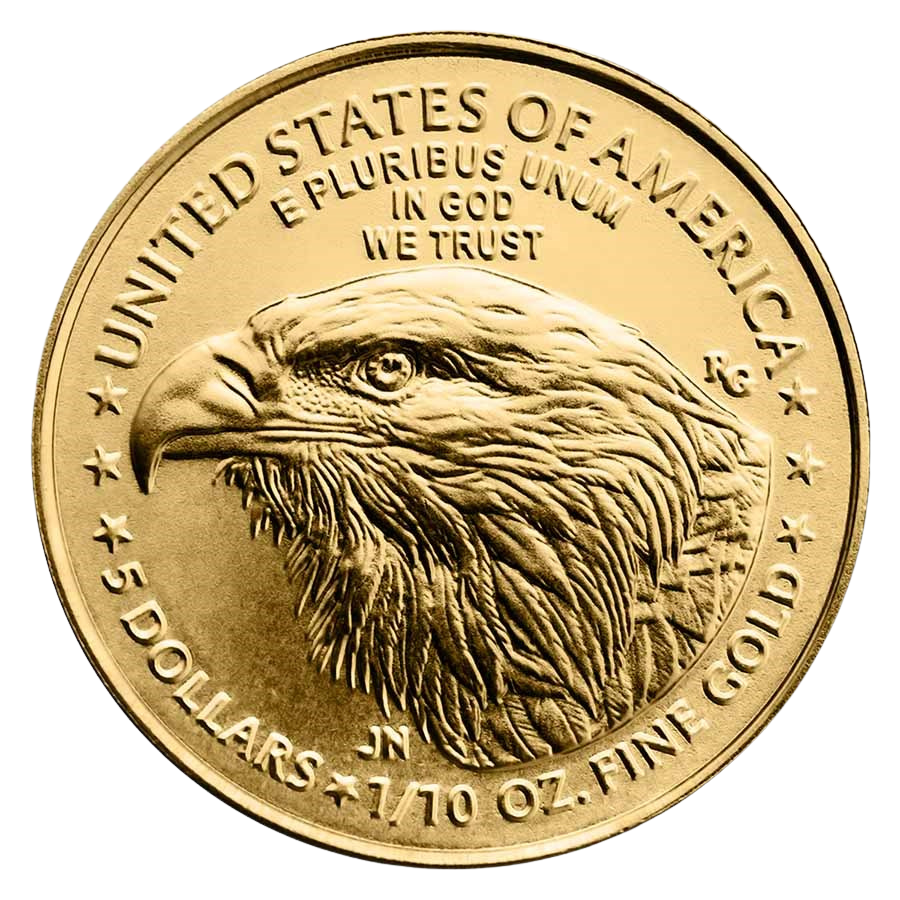

A gold IRA is a self-directed individual retirement account that holds IRS-approved physical gold, silver, platinum, or palladium instead of stocks and bonds. It follows the same tax rules as a regular Traditional or Roth IRA, but the metals must be held by a qualified custodian in an approved depository, not at home.
Key takeaways
- A gold IRA is a self-directed IRA that holds physical bullion or coins meeting IRS purity standards.
- It can be set up as a Traditional (tax-deferred) or Roth (tax-free qualified withdrawals) account.
- For 2026, the IRA contribution limit is $7,500, plus a catch-up contribution for savers 50 and older.2
- IRS rules require metals to be stored in an approved depository; home storage can be treated as a taxable distribution.1
- Most people fund a gold IRA through a direct transfer or rollover from an existing IRA or 401(k).
- Gold is a diversification tool, not a guarantee: its price can fall as well as rise.
How does a gold IRA work?
A gold IRA works like any other IRA, except that you choose physical precious metals for it and three parties handle the account: you, a custodian, and a depository.
- You decide which eligible metals to buy and how much to allocate.
- The custodian (an IRS-approved trustee) administers the account, handles reporting, and keeps it compliant.
- The depository physically stores and insures the metals on your behalf.
- A dealer such as Anthem Gold Group sources the metals and coordinates the purchase with your custodian.
The goal isn’t to replace your stocks and bonds. It’s to add an asset that tends to behave differently from them.
Traditional vs. Roth gold IRA: what’s the difference?
The difference is when you pay tax: a Traditional gold IRA defers tax until withdrawal, while a Roth gold IRA is funded with after-tax money and qualified withdrawals are tax-free.
| Traditional gold IRA | Roth gold IRA | |
|---|---|---|
| Contributions | Typically pre-tax (may be deductible) | After-tax |
| Growth | Tax-deferred | Tax-free |
| Withdrawals | Taxed as ordinary income | Qualified withdrawals are tax-free |
| Required minimum distributions | Yes, starting at age 734 | None for the original owner |
| 2026 contribution limit | $7,500 combined across all IRAs, plus a catch-up for age 50+2 | |
The right choice depends on your tax situation today versus in retirement. A tax professional can help you decide.
Which metals can you hold in a gold IRA?
You can hold gold, silver, platinum, and palladium bullion that meets IRS minimum purity standards, plus certain government-minted coins such as the American Gold Eagle.
| Metal | Minimum fineness | Common IRA-eligible examples |
|---|---|---|
| Gold | .995 | American Gold Buffalo, Canadian Gold Maple Leaf, approved gold bars |
| Silver | .999 | American Silver Eagle, Canadian Silver Maple Leaf |
| Platinum | .9995 | American Platinum Eagle, Canadian Platinum Maple Leaf |
| Palladium | .9995 | Canadian Palladium Maple Leaf, approved palladium bars |
U.S. American Eagle coins are specifically allowed by statute even though the gold Eagle is .9167 fine.3 Collectible and numismatic coins generally are not eligible. See our IRA-eligible products.
Can you store gold IRA metals at home?
No. IRA metals must be held by a qualified trustee in an approved depository; taking personal possession can be treated as a distribution, triggering taxes and possibly penalties.
Approved depositories are built for bullion storage. They insure the metals, are audited, and report holdings to your custodian. You can usually choose segregated storage (your exact bars and coins kept separately) or commingled storage (pooled with metals of the same type).
Be cautious of any “home storage IRA” pitch. If you want metals in your own hands, buy them outside your IRA instead.
How do you fund a gold IRA?
You can fund a gold IRA with a new contribution, a direct trustee-to-trustee transfer from another IRA, or a rollover from an employer plan such as a 401(k).
- Open a self-directed IRA with a custodian that handles precious metals.
- Move the money. A direct transfer is the simplest option and is not subject to the once-per-year rollover limit. With an indirect (60-day) rollover, you must redeposit the funds within 60 days, and you can only do one IRA-to-IRA indirect rollover in any 12-month period.5
- Choose your metals with a precious metals specialist.
- Custodian buys and ships the metals directly to the depository.
Want the full walkthrough? Read Step by Step: How to Open and Fund a Gold IRA.
Why do investors add gold to a retirement account?
Most investors add gold for diversification: it has historically moved independently of stocks and bonds and is widely seen as a long-term store of value during inflation or market stress.
Diversification
Many retirement portfolios are concentrated in stocks and bonds. Gold has historically had a low correlation with both, so it may hold up differently in a downturn. Diversification doesn’t guarantee a profit or prevent losses.
Inflation and currency concerns
Gold isn’t tied to any single government’s monetary policy. That is why investors often turn to it when inflation or currency instability erodes confidence in paper assets.
Tax-advantaged ownership
Holding metals inside an IRA keeps the tax benefits of a retirement account: tax-deferred growth in a Traditional IRA, or tax-free qualified withdrawals in a Roth.
Tangible ownership
A gold IRA holds real, physical metal stored in your name. It is not a fund or a promise backed by another company’s balance sheet.
What are the risks and costs of a gold IRA?
Gold prices can be volatile, gold produces no income, and gold IRAs carry costs that typical brokerage IRAs don’t, such as custodian, storage, and dealer spreads.
- Price volatility: gold can fall in value, sometimes for long stretches.
- No yield: metals don’t pay dividends or interest.
- Account fees: annual custodian and storage fees. Anthem Gold Group may cover these for up to five years, depending on your initial investment.
- Spread: the difference between the buy price and the sell-back price.
- Liquidity steps: selling or taking a distribution goes through your custodian, so it isn’t instant like selling a stock.
Gold IRAs are best suited to long-term investors. They aren’t designed for short-term trading.
Is a gold IRA right for you?
A gold IRA may fit if you want long-term diversification beyond paper assets and prefer tangible holdings. It is usually one part of a retirement plan, not the whole plan.
It may be worth considering if you:
- Hold most of your retirement savings in stocks and bonds
- Are concerned about inflation or long-term market volatility
- Want to own physical assets with IRA tax advantages
- Have an old 401(k) or IRA you’re considering rolling over
Get your free Precious Metals Investor Kit
Plain-language answers on gold IRAs, rollovers, and IRS rules, with no pressure.
Get My Free Guide Call (888) 444-2948Gold IRA FAQs
Is a gold IRA a good idea?
A gold IRA can be a useful diversification tool for long-term investors, but it isn’t right for everyone. Gold doesn’t produce income and its price can drop. Most investors who use one allocate only a portion of their retirement savings to metals.
How much does it cost to open a gold IRA?
Costs typically include a one-time setup fee, annual custodian fees, annual storage fees, and the dealer’s price spread on the metals. Anthem Gold Group may waive IRA storage and custodian fees for up to five years, depending on your initial investment.
Can I roll my 401(k) into a gold IRA?
Yes. Most 401(k), 403(b), TSP, and IRA balances can be moved into a self-directed gold IRA through a direct rollover or transfer, usually without taxes or penalties if done correctly. Employer plans may restrict rollovers while you’re still employed there.
Can I keep my gold IRA at home?
No. IRS rules require IRA metals to be held by a qualified trustee in an approved depository. Taking personal possession can be treated as a taxable distribution.
What is the gold IRA contribution limit for 2026?
The same as any IRA: $7,500 for 2026 across all your IRAs, plus an additional catch-up contribution if you’re 50 or older. Rollovers and transfers don’t count toward this limit.
How do I take money out of a gold IRA?
You can sell the metals and take a cash distribution, or take an “in-kind” distribution where the physical metals are shipped to you. Both count as distributions for tax purposes. Withdrawals before age 59½ may face a 10% penalty.

About the author: John Murphy
[[ROLE AT ANTHEM GOLD GROUP]]. [[X YEARS]] of experience in [[precious metals / retirement planning / financial writing]]. [[One sentence on relevant background, e.g., number of clients helped, credentials, publications]].- IRS: Investments in collectibles in individually directed qualified plan accounts
- IRS: 401(k) limit increases to $24,500 for 2026, IRA limit increases to $7,500
- 26 U.S. Code § 408(m): Investment in collectibles treated as distributions
- IRS: Required minimum distributions (RMDs)
- IRS: IRA one-rollover-per-year rule
This article is for general education only and isn’t tax, legal, or investment advice. Anthem Gold Group is not a licensed financial advisor. Consult a qualified professional before making retirement decisions.