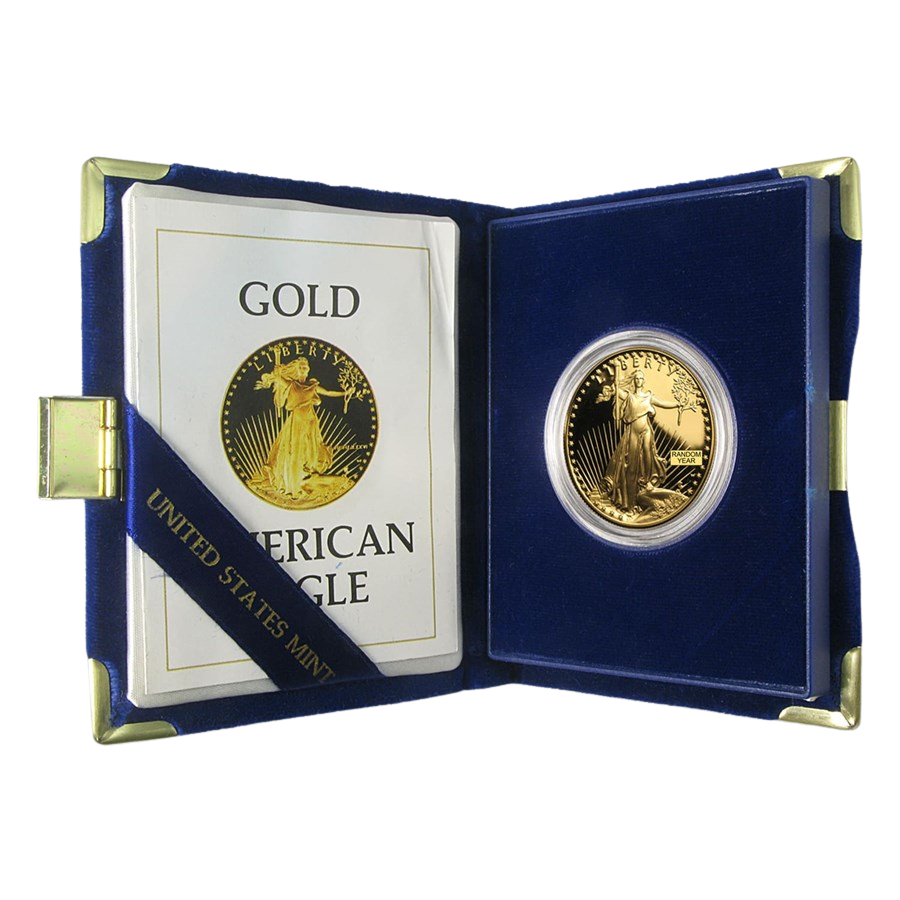

A Gold IRA works in six steps: choose a precious metals company, open a self-directed IRA with a custodian, fund it through a tax-free transfer or rollover, select IRS-approved metals, have them shipped to an approved depository, then manage the account and take distributions from age 59½. Most people finish in two to three weeks.
Key takeaways
- A Gold IRA works in six steps: choose a company, open the account, fund it, pick metals, store them, then manage and withdraw.
- Funding usually comes from a direct transfer or rollover, which isn’t a taxable event when done correctly.
- Only IRS-approved metals can be bought, and they ship straight to an approved depository.
- Penalty-free withdrawals start at age 59½; traditional accounts have RMDs from age 73.
- Most people finish setup in two to three weeks.
Time required: about 2 to 3 weeks start to finish, of which roughly 30 minutes is your active involvement
Cost: approximately $425 in year one and $350 per year after, often less with fee waivers
What you need: a recent retirement account statement, your SSN and ID, and beneficiary details
First, a Quick Refresher
A Gold IRA is a self-directed individual retirement account that holds physical precious metals instead of paper assets. Same tax advantages as a regular IRA, same contribution rules, same withdrawal rules. The difference is what sits inside: real gold, silver, platinum, or palladium in a secure, insured vault in your name. If you want the full background first, start with What Is a Gold IRA?
The IRS has allowed this since 1997, but it comes with structure. You cannot buy coins and declare them retirement savings. Three parties keep everything legitimate:
A custodian, the licensed institution that administers your account and handles IRS reporting
A depository, the approved vault where your metals are physically stored
A precious metals company, like Anthem Gold Group, that guides you through the process, coordinates between everyone, and helps you choose your metals
Here is the part that keeps this manageable: you really only deal with one of the three. Your metals company handles the custodian and depository relationships behind the scenes.
Before You Start: What to Have Ready
You can save yourself a lot of back-and-forth by gathering a few things before your first call:
A recent statement from the retirement account you want to roll over, showing the account number, balance, and current custodian
Your basic personal info (Social Security number, driver’s license) for the account application
A rough idea of how much you want to move. You do not need to roll over everything. Many people move a portion and leave the rest where it is.
Your beneficiary information, since you will designate beneficiaries just like any IRA
That is it. You do not need to know anything about gold yet. That is what the process is for.
Step 1: Choose Your Precious Metals Company
Time: a few days of research. Cost: nothing.
This is the most important decision you will make, because your experience depends almost entirely on who is guiding you. The right company makes the process smooth and educational. The wrong one makes it confusing, expensive, or worse.
A few things to look for:
Transparent pricing. You should get straight answers about fees and costs before committing to anything.
No pressure tactics. Anyone creating artificial urgency (“this deal expires today!”) is telling you something about how they operate.
Strong, verifiable reviews. Look at ratings across multiple platforms like the Better Business Bureau, TrustLink, Trustpilot, and Google, not just testimonials on their own site.
Education first. Good companies want you to understand what you are buying. That is the approach Anthem Gold Group takes, offering free resources and consultations so you can decide on your own terms. They hold a 5.0 rating across 100+ reviews and were named “America’s #1 Trusted Gold IRA Company” by TrustLink.
Questions worth asking on that first call
Bring this list with you. How a company answers tells you as much as the answers themselves:
What are the total first-year costs, including setup, custodian, and storage?
What are the ongoing annual fees after year one?
Do you offer any fee waivers, and what account sizes qualify?
What is your buyback policy if I want to sell later?
Is storage segregated or commingled, and can I choose?
Which custodian and depository do you work with?
What is your account minimum?
If anyone dodges these questions or steers the conversation toward rare collectible coins, thank them for their time and move on. A trustworthy partner will still be there tomorrow.
Step 2: Open Your Self-Directed IRA
Time: 10 to 15 minutes. Cost: $50 to $100 setup, often waived.
Once you have chosen a company, they will help you set up the account itself. This means completing an application with a custodian, and your metals company typically walks you through it or handles most of the paperwork for you.
At this stage you will also decide what type of account you want:
| Account type | Funded with | Taxed when | Best for |
|---|---|---|---|
| Traditional Gold IRA | Pre-tax dollars | On withdrawal | Rolling over a traditional 401(k) or IRA; expecting a lower bracket later |
| Roth Gold IRA | After-tax dollars | Never, if qualified | Expecting higher taxes later; wanting no lifetime RMDs |
| SEP Gold IRA | Employer contributions | On withdrawal | Self-employed and small business owners wanting higher limits |
One practical note: the account type usually needs to match what you are rolling from. A traditional 401(k) rolls into a traditional Gold IRA without taxes. Converting traditional funds to a Roth is possible, but it is a taxable event, so talk to a tax professional before going that route.
Step 3: Fund the Account
Time: 1 to 2 weeks. Cost: nothing, if done as a direct transfer.
Now the account needs money in it, and you have three ways to get it there.
Direct transfer (the most common and cleanest option). Funds move directly from your existing IRA custodian to your new one. You never touch the money, there is no tax withholding, no deadline, and no limit on how many transfers you can do. This is the route most people take.
Rollover from a 401(k) or similar plan. If you have a 401(k), 403(b), 457(b), or TSP from a former employer, you can roll it into your Gold IRA. A direct rollover works like a transfer and is not a taxable event. The IRS rollover chart confirms which account types can move where.
New contribution. You can also simply contribute cash, up to the annual IRA limit of $7,500 for 2026, or $8,600 if you are 50 or older.
The mistakes to avoid at this step
This is the one stage where a wrong move can actually cost you money, so it is worth being explicit:
Avoid indirect rollovers. If a check is made out to you personally, the clock starts: you have 60 days to deposit the full amount into your new IRA or the IRS treats it as a withdrawal, with taxes and possibly a 10% early withdrawal penalty. Employer plans also typically withhold 20% from indirect rollovers, which you would have to make up out of pocket to complete the rollover. Direct transfers avoid all of this.
Check your current 401(k) rules. If the 401(k) is with your current employer, many plans do not allow rollovers while you are still employed, though some offer “in-service” rollovers after age 59½. Old accounts from former employers are almost always fair game.
Don’t cash out first. Some people withdraw money planning to “put it in gold,” not realizing they have just triggered a taxable distribution. The money should always move institution to institution.
This funding step is where having experienced help really pays off. Custodians have their own forms, processes, and quirks, and the team at Anthem Gold Group coordinates the transfer with your current provider so the money moves correctly and on time.
Step 4: Choose Your Metals
Time: one call. Cost: built into the purchase price.
Once your account is funded, the fun part: deciding what to actually own.
| Metal | Minimum purity | Common eligible products |
|---|---|---|
| Gold | 99.5% | American Gold Eagle, Canadian Gold Maple Leaf, accredited refiner bars |
| Silver | 99.9% | American Silver Eagle, Canadian Silver Maple Leaf, accredited bars |
| Platinum | 99.95% | American Platinum Eagle, Canadian Platinum Maple Leaf |
| Palladium | 99.95% | Canadian Palladium Maple Leaf, accredited bars |
How people typically think about the mix
There is no single right answer, but a few practical considerations help:
Gold vs. silver. Gold is the classic wealth preserver and stores a lot of value in a small space. Silver is more affordable per ounce, historically more volatile, and has heavy industrial demand. Many investors hold both.
Coins vs. bars. Government-minted coins like Eagles and Maple Leafs are instantly recognizable worldwide and easy to liquidate one at a time. Bars pack more metal into a compact form, which some investors prefer at larger amounts. Many portfolios include both.
One compliance note: the IRS does not permit collectible or rare “numismatic” coins inside an IRA, so everything in your account needs to be IRA-eligible bullion. A good specialist will confirm eligibility on every product before you buy, which is exactly what the team at Anthem Gold Group does as standard practice. The complete eligibility picture is in Gold IRA Rules: What the IRS Allows and Prohibits.
Step 5: Your Metals Go Into Secure Storage
Time: a few days to a week. Cost: $100 to $300 per year, insurance included.
After your purchase, the metals ship directly to an IRS-approved depository. These are purpose-built vaults with 24/7 monitoring, armed security, and full insurance coverage. Your holdings are documented, audited, and held in your name.
You will receive confirmation of exactly what you own, and your custodian provides regular account statements just like any other retirement account.
Two storage questions worth asking:
Segregated or commingled? Segregated storage means your exact coins and bars sit in their own space with your name on them, typically $150 to $300 per year. Commingled storage pools identical products together and credits you your share, typically $100 to $150. Both are fully compliant and fully insured.
Which depository? Common options include facilities like the Delaware Depository and Texas-based vaults. Some investors prefer a location in a particular state for legal or personal reasons, and many companies let you choose.
And to be clear on one point: you cannot store IRA metals at home. Home storage violates IRS rules and can disqualify your entire account, triggering taxes and penalties on everything. In McNulty v. Commissioner (2021), the Tax Court treated home-stored IRA gold as a full taxable distribution with accuracy-related penalties.
Step 6: Manage, Monitor, and Eventually Withdraw
Time: ongoing. Cost: $350 per year, typically.
From here, your Gold IRA works like any other retirement account. You can:
Check your holdings through regular statements and online account access
Buy more metals over time with new contributions or additional transfers
Rebalance by selling metals within the account, with no tax consequences for transactions inside the IRA
When retirement arrives, you have choices. Starting at age 59½ you can take distributions without penalty, in one of two ways:
Cash distribution. The custodian sells metals on your behalf and sends you the proceeds.
In-kind distribution. The physical metals are shipped to you. The value is taxed as a distribution for traditional accounts, but the gold itself lands in your hands.
Traditional Gold IRAs are subject to required minimum distributions starting at age 73. One planning note: since you cannot withdraw “part of a coin,” it is smart to talk with your custodian ahead of RMD season about whether to take cash, metals, or satisfy the RMD from another IRA you own. The IRS lets you take your total RMD from any combination of your traditional IRAs.
How Long Does a Gold IRA Take to Set Up?
Faster than most people expect.
| Stage | Typical time |
|---|---|
| Opening the account | Same day, often within the hour |
| Funding via transfer or rollover | 1 to 2 weeks |
| Purchasing and shipping metals to the depository | A few days to a week |
| Total | About 2 to 3 weeks |
Most of that is just waiting on institutions to move money.
Get your free Precious Metals Investor Kit
Plain-language answers on Gold IRAs, rollovers, and IRS rules, with no pressure.
Get My Free Guide Call (888) 444-2948Gold IRA Process FAQ
Can I add to my Gold IRA later?
Yes. You can make annual contributions and do additional transfers or rollovers from other accounts at any time.
What happens if my metals company goes out of business?
Nothing happens to your gold. It is held by the depository in your name under your custodian’s administration, not on the company’s balance sheet. You would simply work with a different dealer going forward.
Can I see my gold?
Many depositories allow scheduled visits, and your account statements itemize exactly what you hold, down to the specific products and quantities.
What if I change my mind?
Metals in your IRA can be sold and the funds moved back into other investments, or transferred to another IRA entirely. Ask about the company’s buyback program before you buy, so you know how selling works ahead of time.
Is a Gold IRA rollover taxable?
A properly executed direct transfer or direct rollover is not a taxable event. Taxes come into play only when you take distributions, same as any traditional IRA.
How much do I need to start?
Most companies set a minimum, commonly $10,000 to $25,000. Ask on your first call, since it varies.
Can I roll over a 401(k) from my current employer?
Often not while you are still employed there, though some plans allow in-service rollovers after 59½. Accounts from former employers are almost always eligible.
The Bottom Line
A Gold IRA works through a simple sequence: pick a trusted company, open a self-directed account, fund it through a tax-free transfer or rollover, select IRS-approved metals, and let them sit safely in an insured vault.
The process itself is not hard. What matters is doing it correctly, because the IRS rules around rollovers, eligible metals, and storage are exactly where do-it-yourselfers get burned. If you are still deciding whether an IRA is the right structure at all, compare it against buying outright in Gold IRA vs. Physical Gold, and check the running costs in Gold IRA Fees Explained.
Talk to a specialist at Anthem Gold Group or call (888) 444-2948. They will walk you through each of these steps as they apply to your situation, answer the questions on your list honestly, and never rush you.

About the author: John Murphy
[[ROLE AT ANTHEM GOLD GROUP]]. [[X YEARS]] of experience in [[precious metals / retirement planning / financial writing]]. [[One sentence on relevant background, e.g., number of clients helped, credentials, publications]].IRS Publication 590-A: Contributions to Individual Retirement Arrangements
IRS Publication 590-B: Distributions from Individual Retirement Arrangements
McNulty v. Commissioner, 157 T.C. No. 10 (2021)
Educational content only, not financial or tax advice. Confirm your own situation with a licensed advisor or CPA before moving retirement funds. Anthem Gold Group is not a licensed financial advisor.