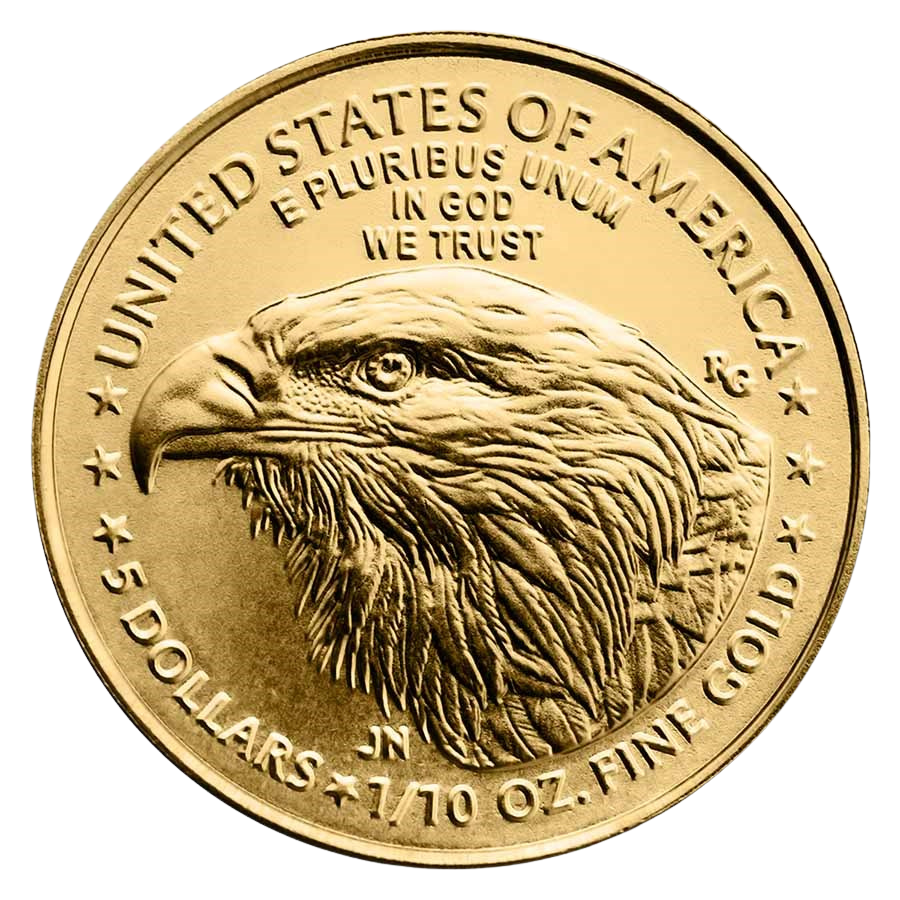

The main difference is what the account holds: a gold IRA owns physical, IRS-approved precious metals, while traditional retirement accounts such as 401(k)s and IRAs hold paper assets like stocks, bonds, and funds. Tax treatment is largely the same, but gold IRAs add storage and custody costs, and most investors use them to complement, not replace, their existing accounts.
Key takeaways
- Traditional retirement accounts (401(k)s, Traditional and Roth IRAs) hold paper assets whose value depends on markets, rates, and earnings.
- A gold IRA is a self-directed IRA holding physical gold, silver, platinum, or palladium that meets IRS purity standards.
- Both can be Traditional (tax-deferred) or Roth (tax-free qualified withdrawals), and both share the 2026 IRA limit of $7,500, plus a $1,100 catch-up at age 50+.1
- Gold IRAs cost more to hold because of custodian and depository storage fees.
- Gold pays no dividends or interest, so it’s usually treated as a diversifier, not a growth engine.
What counts as a traditional retirement account?
Traditional retirement accounts are the familiar tax-advantaged accounts most Americans use: employer 401(k) plans, Traditional IRAs, and Roth IRAs, typically invested in stocks, bonds, index funds, and ETFs.
- 401(k): employer-sponsored, often with matching contributions. The 2026 employee limit is $24,500.1
- Traditional IRA: typically funded with pre-tax (deductible) dollars; withdrawals are taxed as income.
- Roth IRA: funded with after-tax dollars; qualified withdrawals are tax-free.
Advantages
- Tax-deferred or tax-free growth
- Easy to open and widely available
- Daily pricing and fast liquidity
- Employer matching in many 401(k) plans
Limitations
Their value is closely tied to financial markets. During market stress, inflation, or recessions, a portfolio concentrated in paper assets can swing sharply. That’s why some investors look for assets that behave differently.
What is a gold IRA?
A gold IRA is a self-directed IRA that holds physical precious metals, including gold, silver, platinum, and palladium, inside a tax-advantaged retirement account.
The metals must meet IRS purity standards and be stored in an approved depository overseen by a qualified custodian. A gold IRA isn’t meant to replace your other accounts. It’s typically used to add diversification. For the full basics, read What Is a Gold IRA? A Complete Guide.
What are the key differences between a gold IRA and a traditional IRA or 401(k)?
The biggest differences are the asset type and how it’s stored; the tax rules are essentially the same.
| Gold IRA | Traditional retirement account | |
|---|---|---|
| What it holds | Physical gold, silver, platinum, palladium | Stocks, bonds, mutual funds, ETFs |
| Main role | Diversification, store of value | Long-term growth and income |
| Tax treatment | Traditional or Roth IRA rules | Traditional or Roth rules |
| Custody | Custodian plus IRS-approved depository | Brokerage or plan administrator, held electronically |
| Income | None (no dividends or interest) | Dividends and interest possible |
| Typical costs | Custodian, storage, and dealer spread | Fund expense ratios, account and advisory fees |
Asset type
Traditional accounts hold financial instruments that represent ownership in a company or a loan to it. A gold IRA holds physical metal that exists independently of any company’s balance sheet, so it often reacts differently to economic conditions.
Diversification potential
Stocks and bonds respond to interest rates, corporate earnings, and economic growth. Gold has historically been viewed as a store of value during uncertainty, inflation, or currency weakness. Diversification doesn’t guarantee profits or prevent losses, but it can reduce reliance on any single market outcome.
Tax treatment
A Traditional gold IRA grows tax-deferred, with tax due on distribution. A Roth gold IRA may allow tax-free qualified withdrawals. You keep the same retirement tax advantages when you add metals.
Storage and custody
Traditional assets are held electronically. Gold IRA metals must be held in an approved depository; taking personal possession can be treated as a taxable distribution.2 This physical component adds logistics that paper accounts don’t have.
Does a gold IRA cost more than a traditional retirement account?
Usually yes. Gold IRAs carry custodian and storage fees because physical metal must be held and insured, while index-fund IRAs and many 401(k)s have relatively low costs.
| Traditional retirement account | Gold IRA |
|---|---|
| Fund expense ratios | Annual custodial fees |
| Account maintenance fees | Annual depository storage fees |
| Advisory fees, if applicable | Transaction costs and dealer spread when buying metals |
These costs reflect the requirements for holding physical assets in compliance with IRS rules. Anthem Gold Group may cover IRA custodian and storage fees for up to five years, depending on your initial investment.
How easy is it to sell or withdraw from a gold IRA?
Gold IRAs are liquid, but selling takes a little longer than selling a stock because the custodian coordinates the sale and pricing of physical metal.
Stocks and funds can be sold within seconds during market hours. Precious metals also trade in deep global markets, and a reputable custodian can process a sale efficiently.
Distributions follow the same IRS rules as other IRAs. That includes required minimum distributions from Traditional IRAs, which generally begin at age 73.3
What are the risks of each?
Both carry risk: traditional accounts are exposed to stock and bond markets, while gold prices can swing with supply, demand, and global economics, and gold produces no income.
- Market risk: equities and bonds can fall in downturns; gold can also fall, sometimes for long stretches.
- Opportunity cost: gold pays no dividends or interest. In strong equity markets, growth-heavy portfolios may outperform it.
That’s why many financial professionals treat gold as a strategic allocation rather than a growth engine. You can track recent prices on our live precious metals charts.
Should you use a gold IRA and a traditional account together?
For many investors the question isn’t either/or but balance: traditional accounts for growth and income, and a gold IRA for diversification and potential stability.
The right allocation depends on your goals, risk tolerance, time horizon, and overall financial picture. Many people fund a gold IRA by transferring or rolling over part of an existing IRA or 401(k). See Step by Step: How to Open and Fund a Gold IRA.
Anthem Gold Group’s approach is educational. Our specialists can:
- Explain the pros and cons of each option
- Review rollover and funding possibilities
- Clarify IRS rules and custodial requirements
- Walk you through each step, including IRA-eligible products
Get your free Precious Metals Investor Kit
See how a gold IRA could sit alongside your 401(k) or IRA, with plain-language answers and no pressure.
Get My Free Guide Call (888) 444-2948Gold IRA vs. traditional account FAQs
Is a gold IRA better than a traditional IRA?
Neither is better in every case; they do different jobs. Traditional IRAs and 401(k)s are built for long-term growth through stocks and bonds, while a gold IRA adds physical metals for diversification. Many investors hold both.
Is a gold IRA taxed differently from a regular IRA?
No. A gold IRA follows the same tax rules as other IRAs. A Traditional gold IRA grows tax-deferred and is taxed on withdrawal, while a Roth gold IRA may allow tax-free qualified withdrawals.
Do gold IRAs have higher fees?
Generally yes. Gold IRAs include custodian fees, depository storage fees, and the dealer’s spread on metals, which index-fund accounts don’t have. Anthem Gold Group may cover IRA custodian and storage fees for up to five years, depending on your initial investment.
Can I move money from my 401(k) into a gold IRA?
Yes. Many 401(k) and IRA balances can be moved into a self-directed gold IRA through a direct rollover or trustee-to-trustee transfer. Done correctly, this usually avoids taxes and penalties, though some employer plans restrict rollovers while you still work there.
Does a gold IRA have required minimum distributions?
A Traditional gold IRA follows the same RMD rules as any Traditional IRA, which generally begin at age 73. You can meet an RMD by selling metals for cash or by taking metals in kind.

About the author: John Murphy
[[ROLE AT ANTHEM GOLD GROUP]]. [[X YEARS]] of experience in [[precious metals / retirement planning / financial writing]]. [[One sentence on relevant background, e.g., number of clients helped, credentials, publications]].This article is for general education only and isn’t tax, legal, or investment advice. Anthem Gold Group is not a licensed financial advisor. Consult a qualified professional before making retirement decisions.